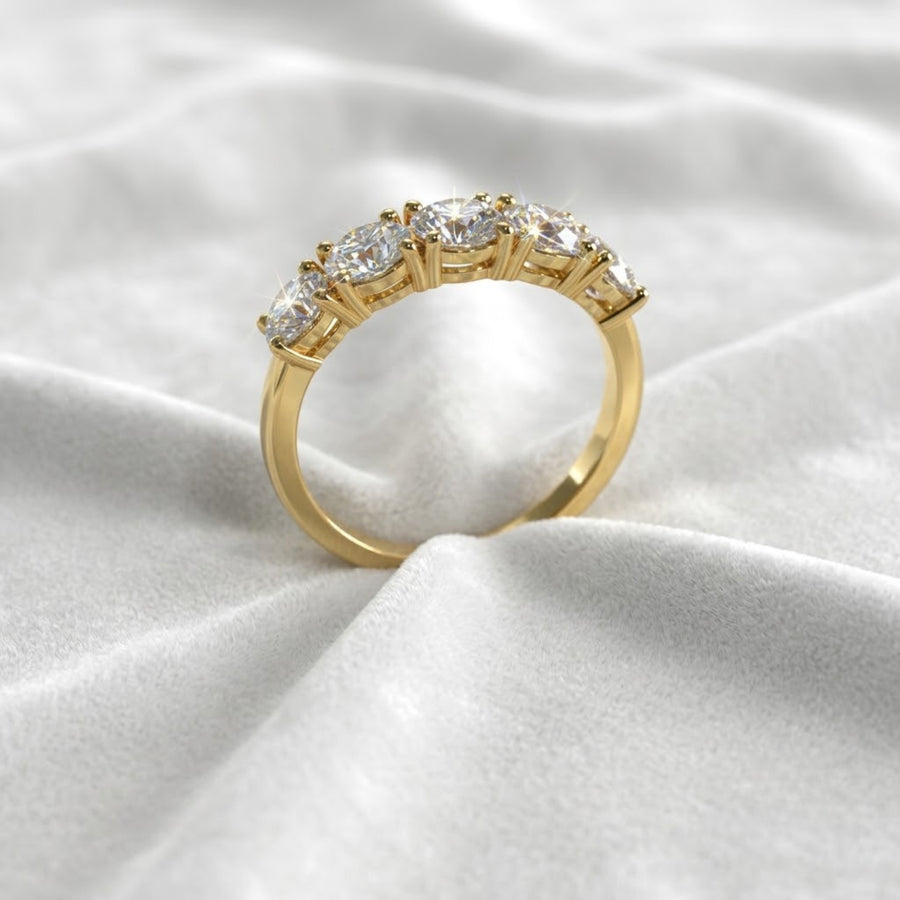
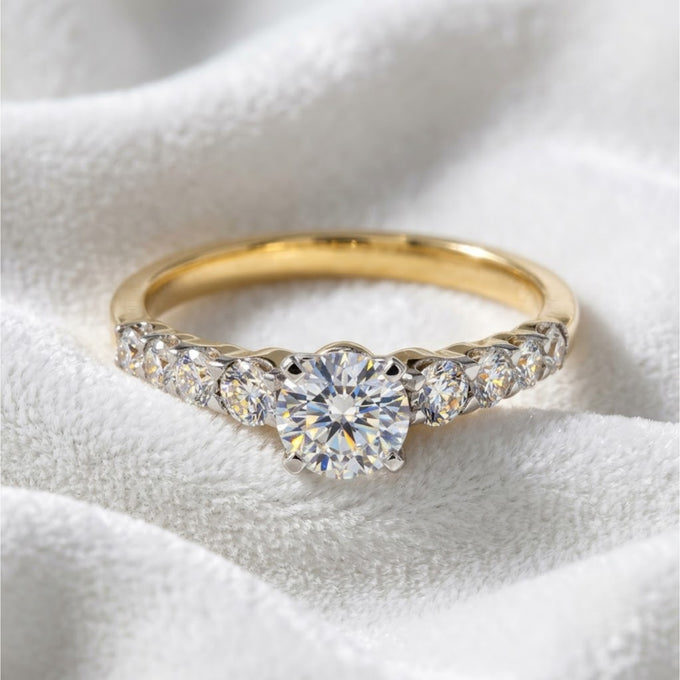
Round
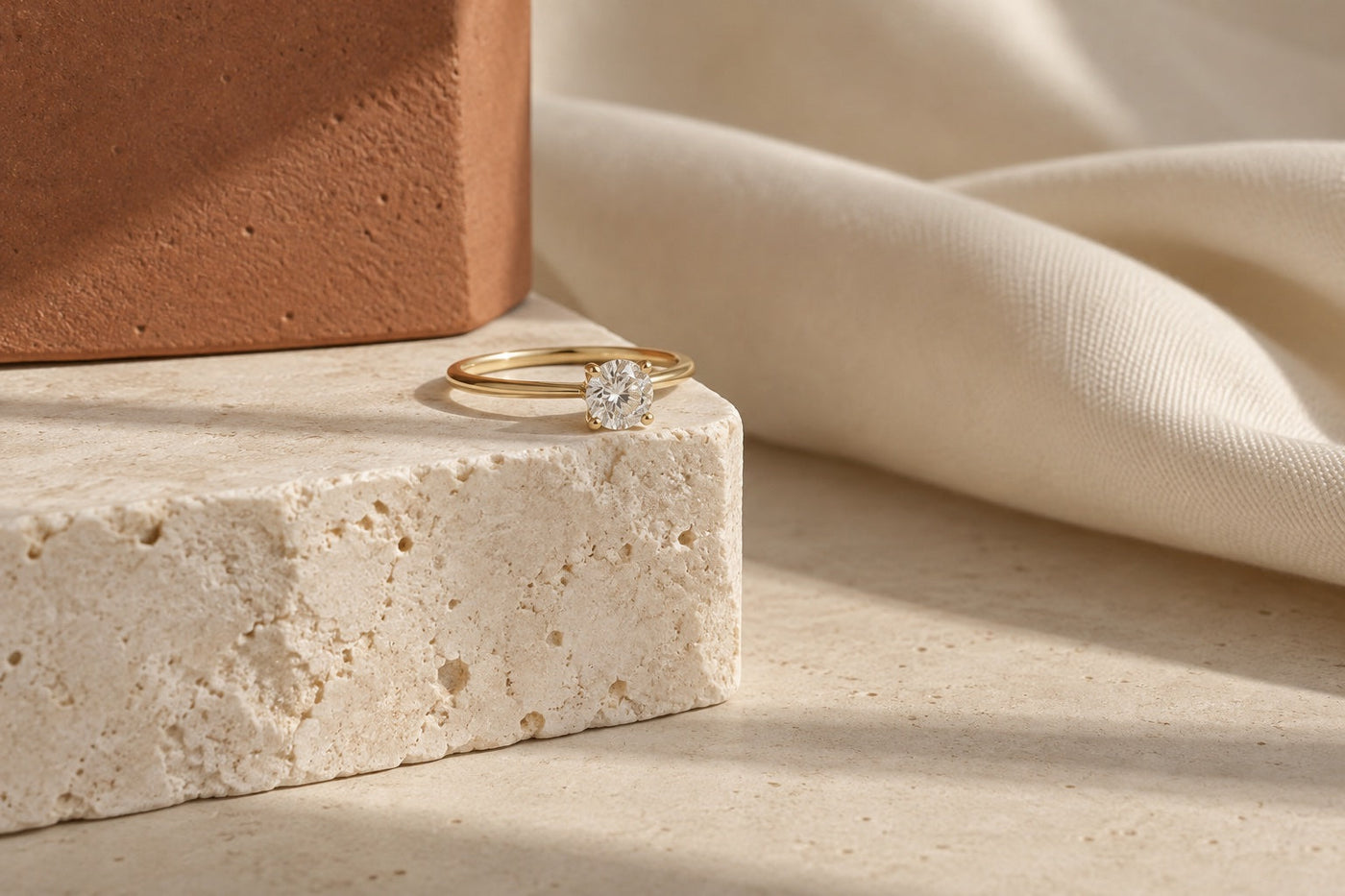
A circle with no corners. An open prong setting reveals the outline, while a bezel draws a fine rim around it.
View round ring

A marquise draws a line along the finger. A round brings the eye to its center. Find the outline that feels like yours.
Compare six shapes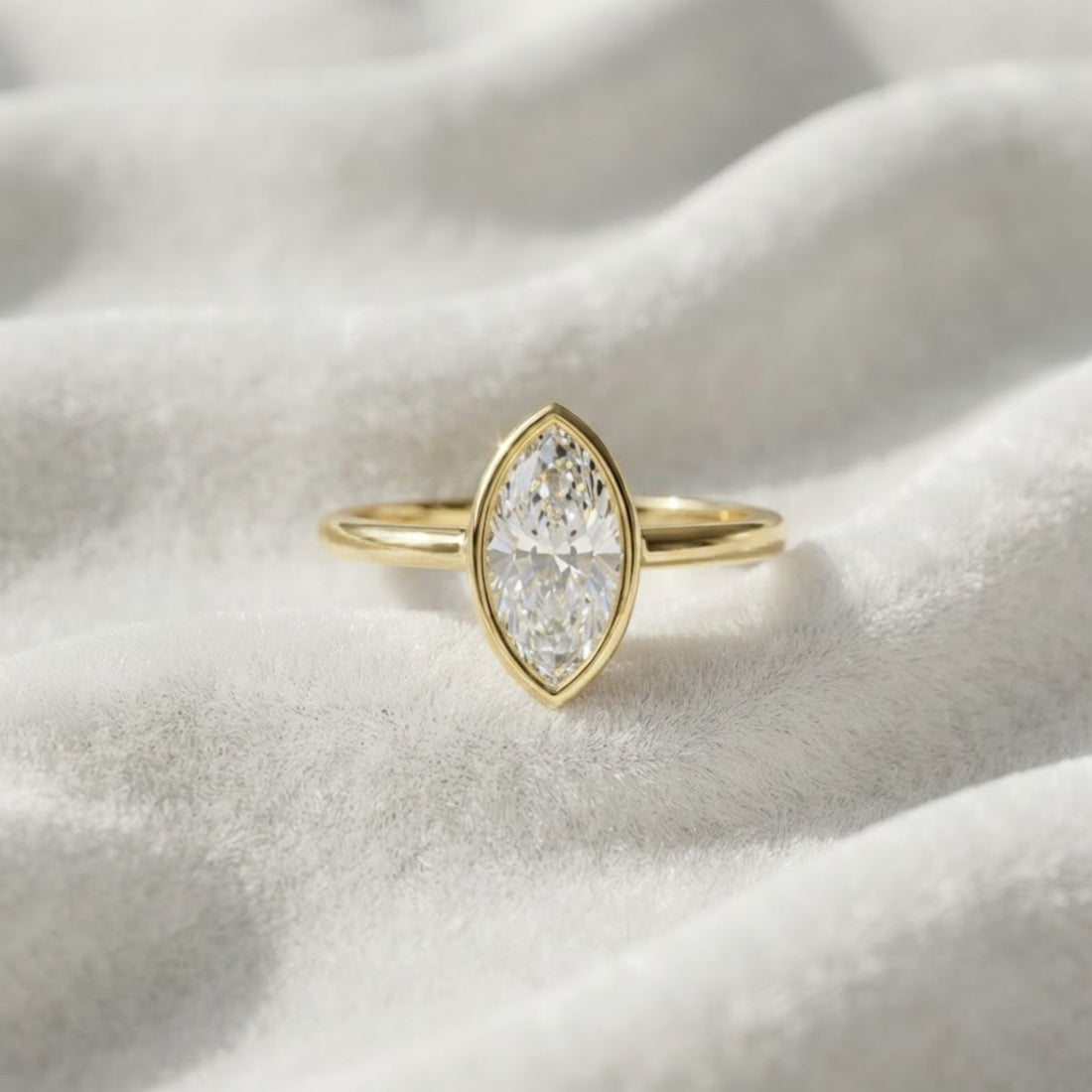
Six silhouettes, each shown in an Elrock setting. Look first at the edge of the stone, then at the way the gold frames it.
A circle with no corners. An open prong setting reveals the outline, while a bezel draws a fine rim around it.
View round ring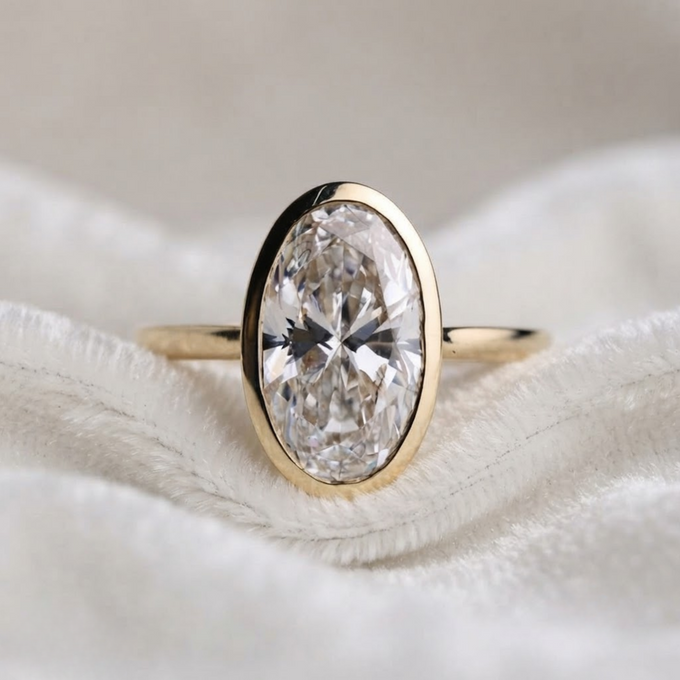
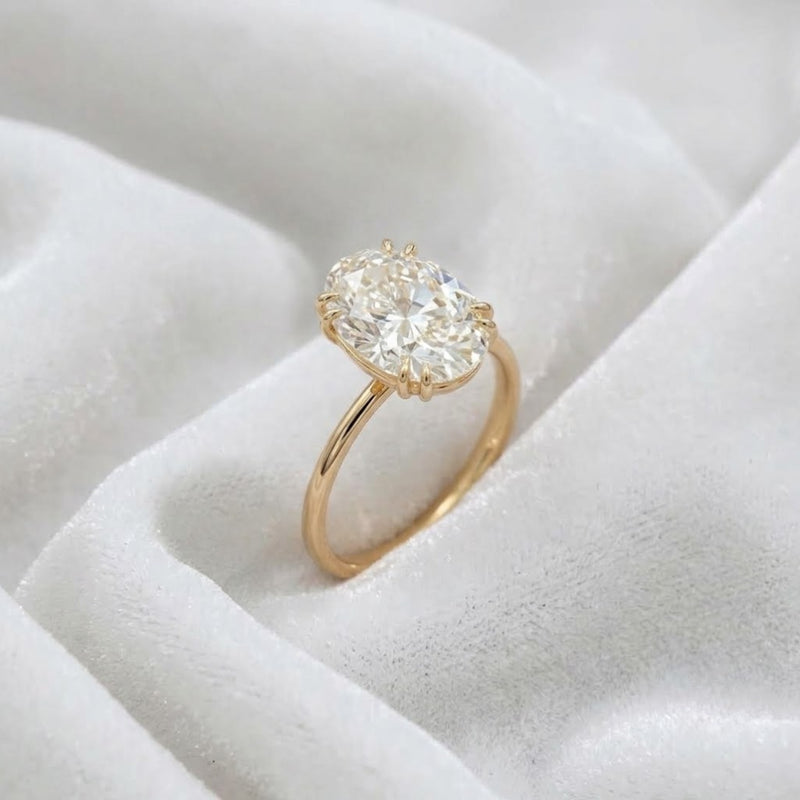
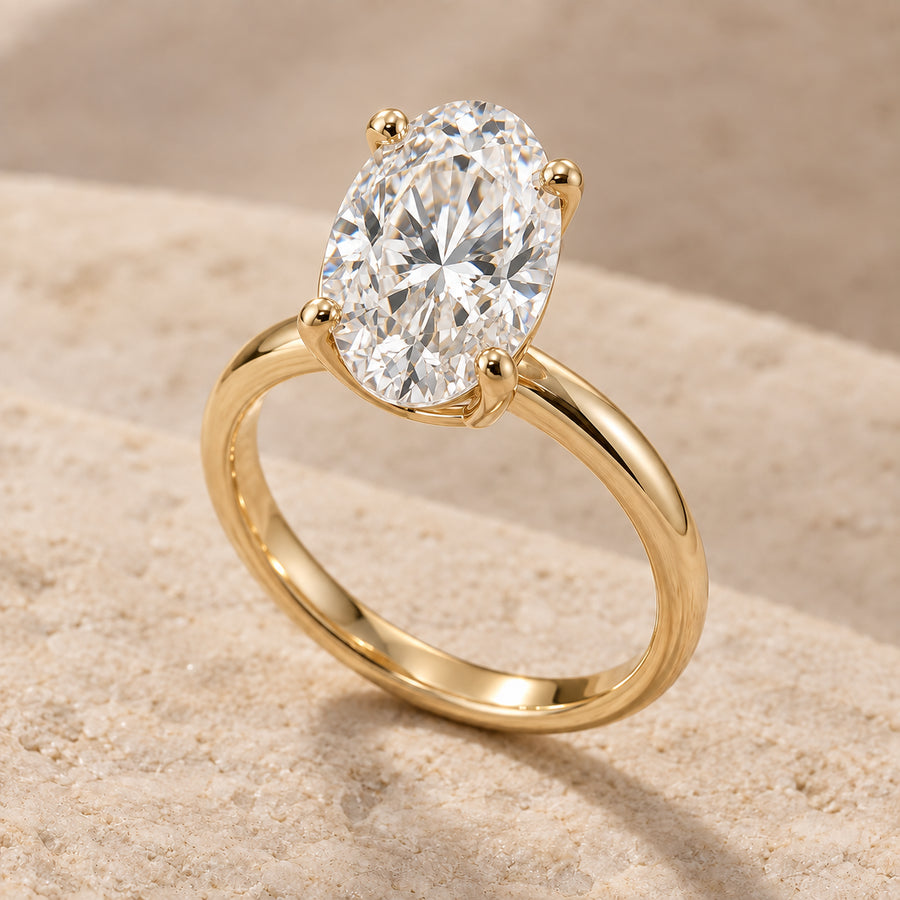
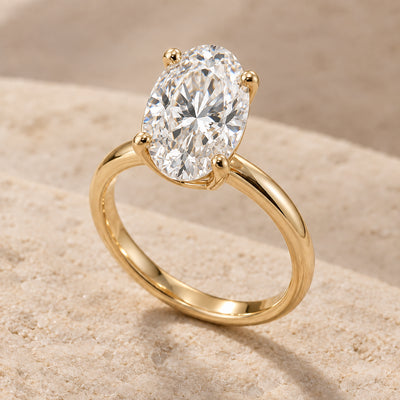
One continuous curve. Compare length and width to see whether you prefer a slender oval or a fuller one.
View oval ring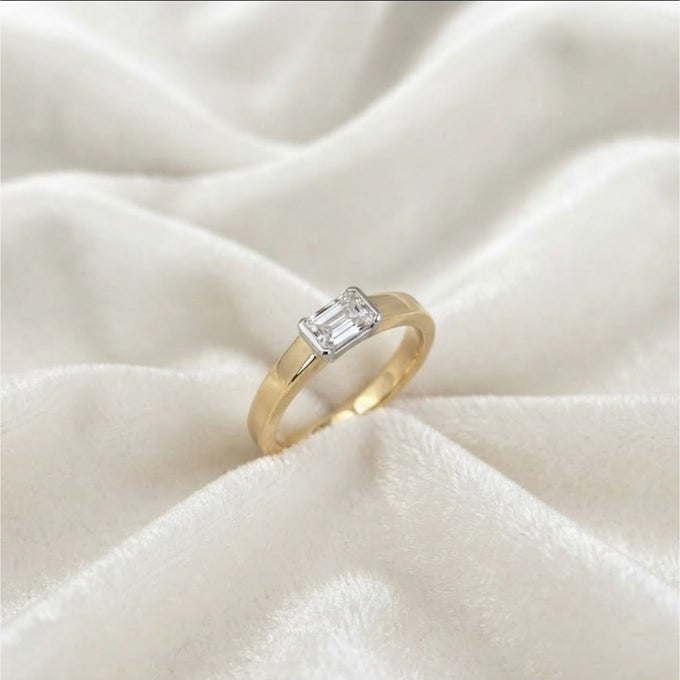
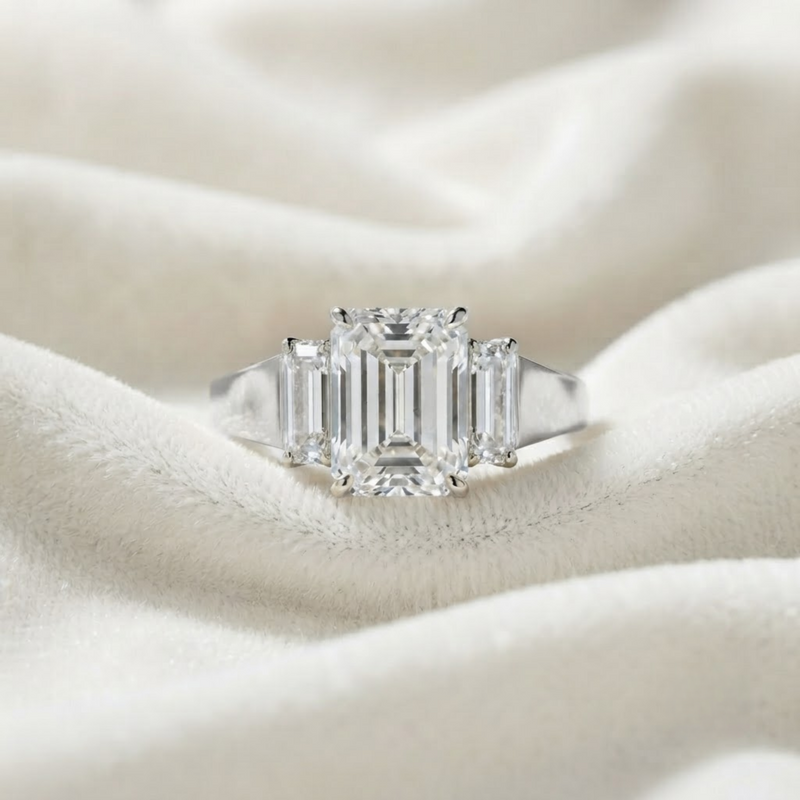
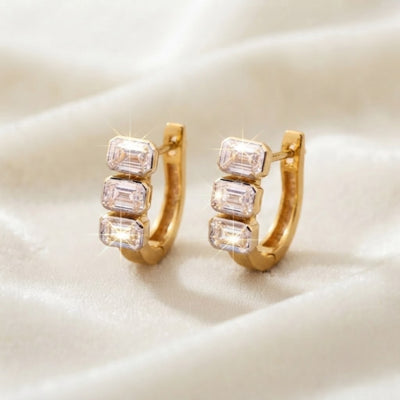
Clipped corners and long step facets. Tilt an emerald cut to see broad flashes of light move across the stone.
View emerald ring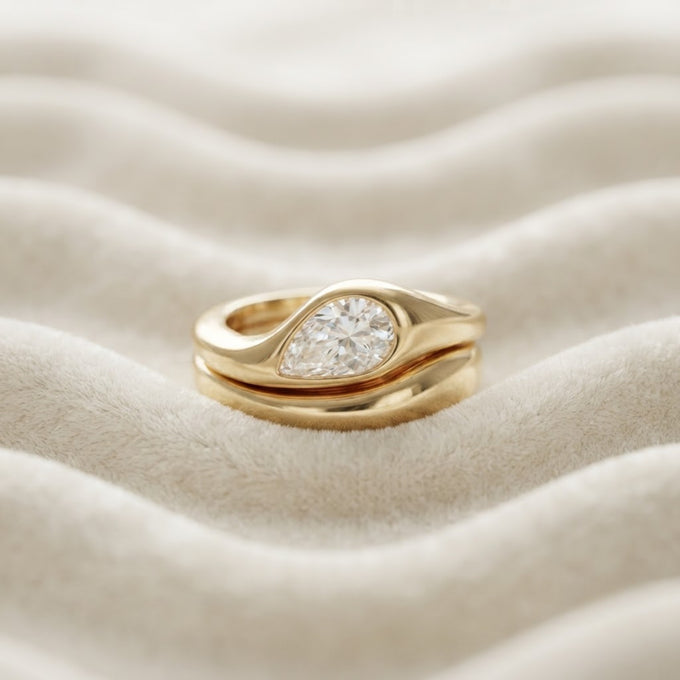
One rounded end, one point. Try the tip toward the wrist, toward the fingertip or sideways across the hand.
View pear ring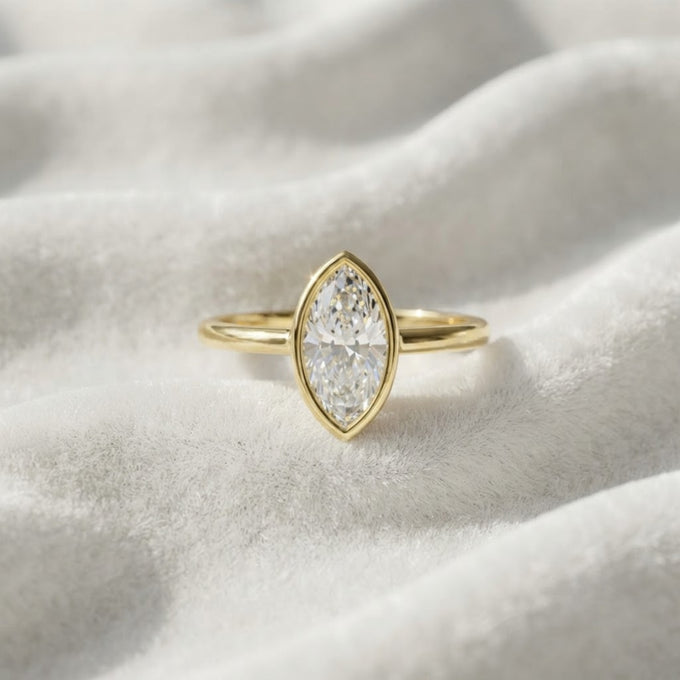
Two pointed ends frame a curved center. A north–south setting emphasizes length, while east–west follows the band.
View marquise ring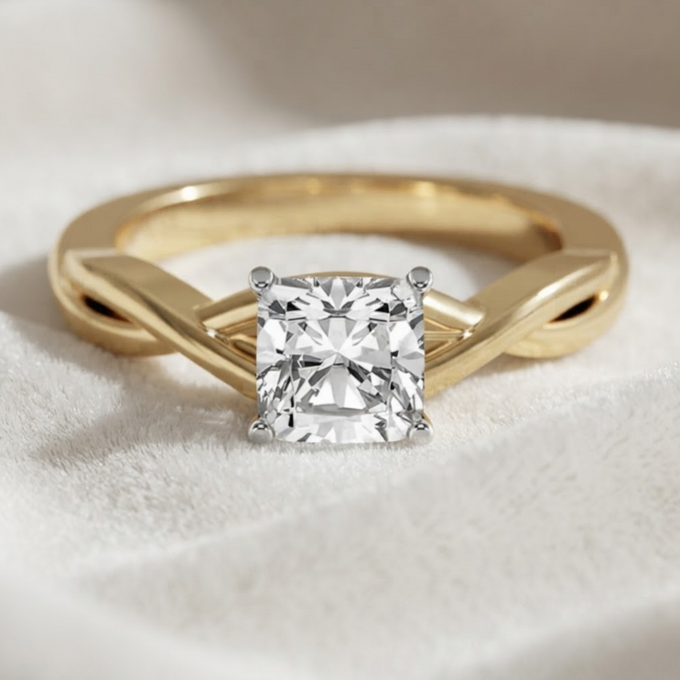
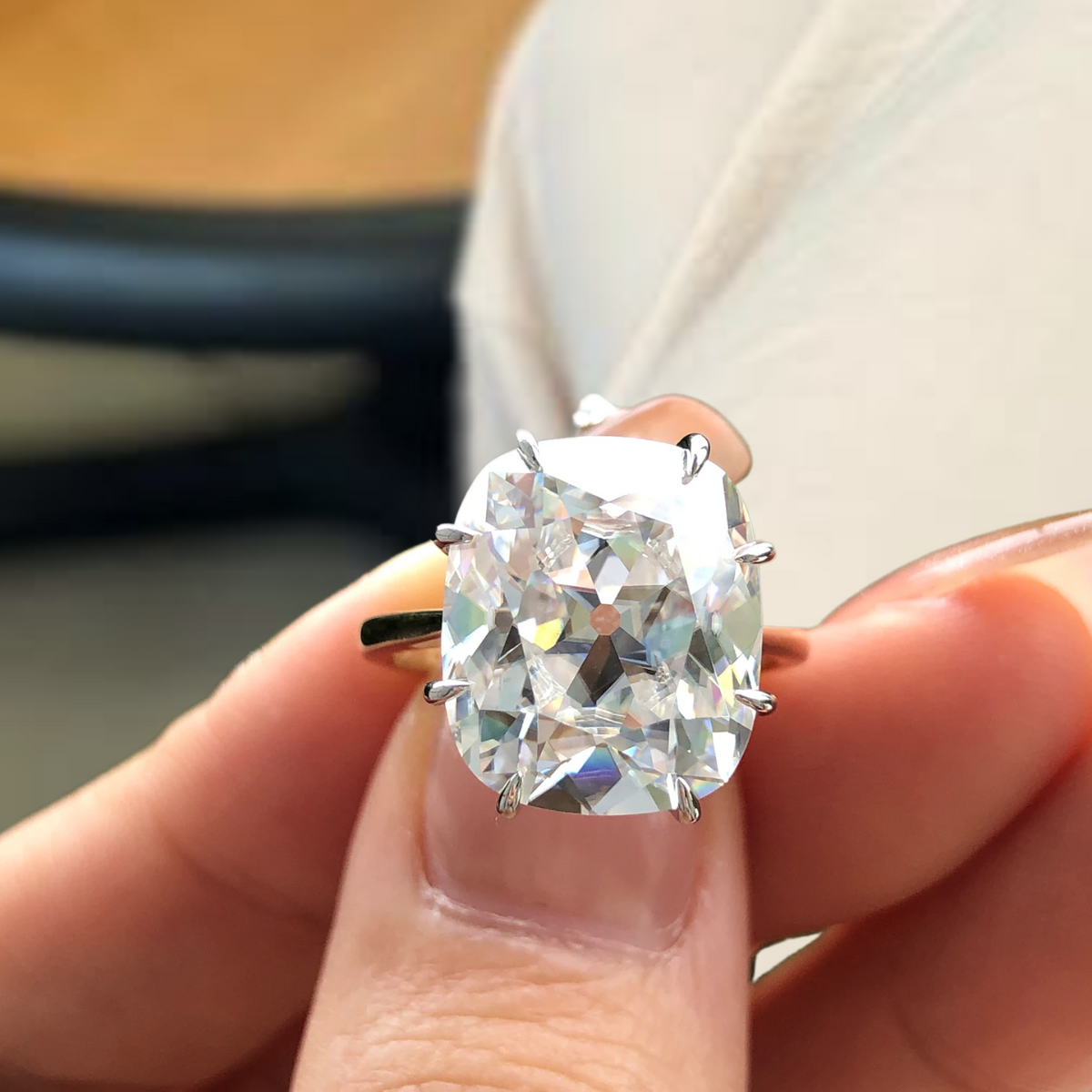
Soft corners give a square or elongated stone a pillow-like outline. Compare both proportions on the same hand.
View cushion ringCarat measures weight. To picture a diamond on your finger, compare its face-up length and width in millimeters. For a diamond with an IGI report, you can check its recorded shape and measurements.
Design your ringVerify an IGI report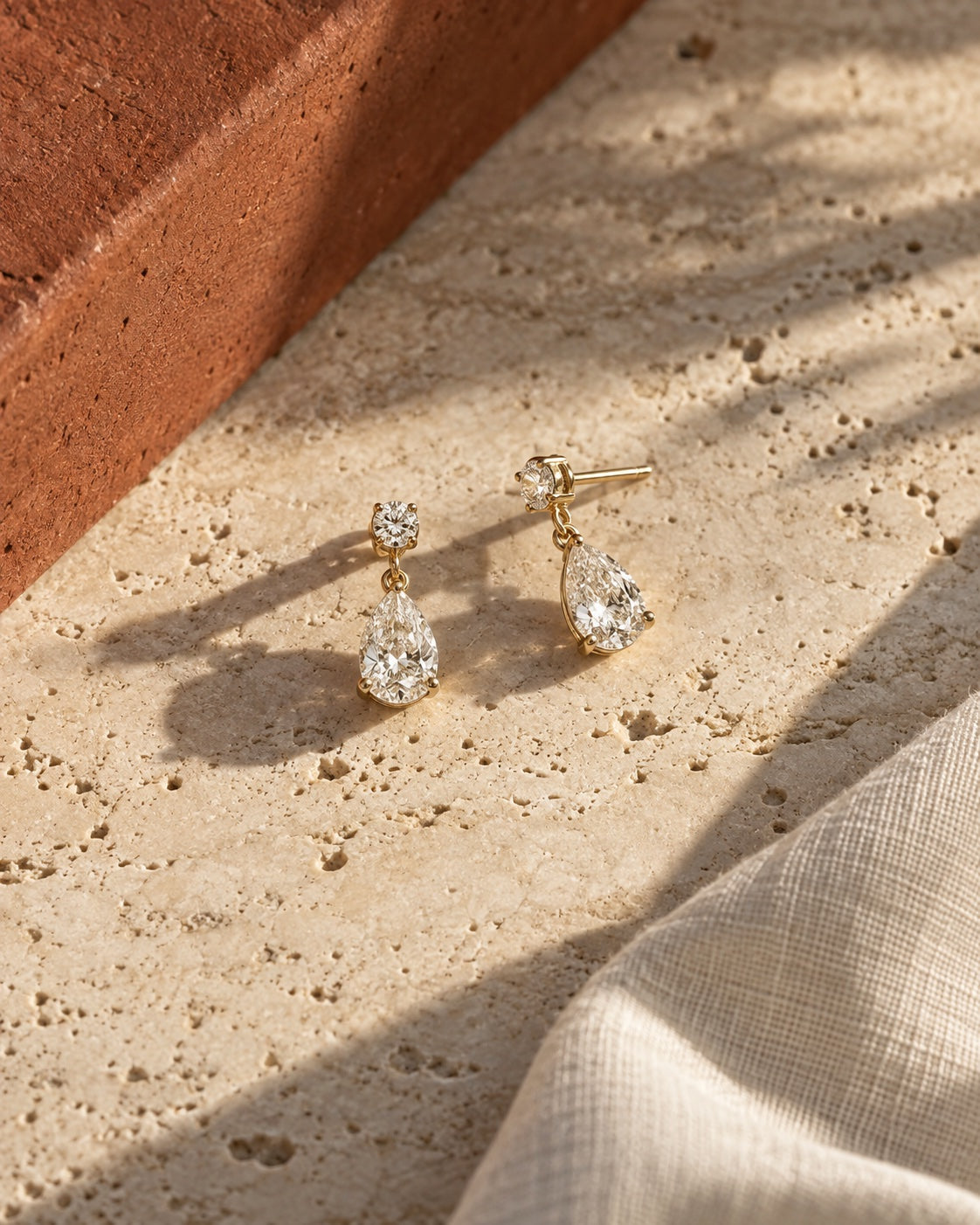
The edit
Questions about a diamond, a ring size or a custom piece? Our team answers personally, from your first message to your finished piece.